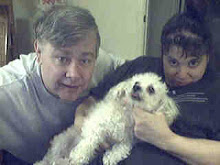
You can access our next show at http://copingwithcancer.siteproplus.com/65678.html
I want you to know that because of my Pastor, Rev. John Payne, that I did not just give up and die.....When I found out that I had cancer for a 2nd time and that was in 1988, this was a very depressing time in my life...I believe that God sent Rev. John Payne to pray for me and to encourage me to have a 2nd cancer surgery. I praise God on this Easter, that I know that "Christ has died, Christ has risen, and that (Jesus) Christ will come again!
I hope to be able to blog more once I start back on my old shift at www.kslr.com
God Bless You on this Easter Day!!
Saturday, April 7, 2007
Sunday, April 1, 2007
Prayer Request!
Judy said...
I need prays I found out last week that I have Stomach Cancer.
Thank You
Judy From Mississippi
March 31, 2007 4:26 AM Please pray for Judy!
God Bless You Judy!
I need prays I found out last week that I have Stomach Cancer.
Thank You
Judy From Mississippi
March 31, 2007 4:26 AM Please pray for Judy!
God Bless You Judy!


Tonite's Coping With Cancer
Our special guest will be my good friend Blake Lindsay! Blake's is a blind guy with more "sight" than most people I know!! His website is http://www.blakelindsay.com/
He is the Author of "Out of Sight Living" Quoting Blake "Out of Sight Living, is a book I wrote to inspire everyone, and especially for anyone who has a unique challenge, or knows some one, who they would like to encourage with my book Out of Sight Living. I really try to get people to love life to the fullest in this book.
This will be the 3rd time that we have asked Blake to share his story with our listeners! Blake is a man of God and he will encourage you with his special "Sight"!
Blake is working with Mr. Zig Ziglar, in sales, and has his host for the Ziglar Weekly Inspire Podcast. All of their shows stay up for several weeks, for those who want to get caught up, or to re-visit one they enjoyed and received lots of great food for thought on. He simply introduces Zig, and at the end, Blake ties his points together. Eight to ten minutes, on each Podcast, at http://www.ziglar.com
Blake's email address is blake@blakelindsay.com
Blake will have an appearance on KABB-FOX-29 (San Antonio affliate) Wednesday Morning April Eleventh, at 7:40. He will have a interview to talk about specifics on Out of Sight Living.
Here's Chaper 9 of his book as posted on his website:
Chapter Nine: Navigating Through Darkness
People often ask me which of my four senses is the most valuable. With no reservation, I always reply that my hearing is the most important because of the superior expanded sense of echo, which helps me avoid running into people or things. I assume that this is the type of mechanism bats use to hear. I am able to use the echoes to guide me on when to make a turn in a building and when I need to walk around something in my direct path. I cannot hear when there is a flight of stairs going down, but I can usually feel a draft.
The only downside is that an object needs to be at least waist high before my ears can pick up an echo. At times this has caused me pain—literally. Take for example, a dog’s favorite thing to mark his spot on…yes, a fire hydrant. Fire hydrants hurt. I can’t for the life of me figure out why dogs like them so much. I don’t particularly care for their height or lack thereof.
Being around sighted people all my life, I think that one of the questions that I am asked most often is how I am able to navigate into unfamiliar areas. I have had quite the journey of navigating, which all started with my mobility instructor, Pat Soja. Pat Soja taught me the importance of using hearing to assist in my independence. Part of the training I received involved complete concentration on my keen sense of hearing in order to line up with traffic and confidently cross busy intersections with stoplights.
The summer following my freshman year in high school, it was time to experience self-navigation. At the time my family lived in the small suburb of Westfield, just north of Indianapolis. Mr. Soja patiently and effectively guided me through town.
He first taught me how to get to my favorite hot spots, otherwise known as places to eat. The bakery was the first place we journeyed. After the bakery we strolled to other restaurants. Besides restaurants, I was also shown how to get to the post office and a few other key businesses. There were occasional mishaps, forgetting where to make a turn or going too far or not far enough. But when I had it down, being able to walk about freely throughout my hometown gave me a great sense of independence. I could tell people were impressed watching me without a guide. Prior to learning self-navigation, I would often find myself with nothing to do. At times I was restless. Suddenly, everything had changed.
The Christmas break following my working with Mr. Soja, I decided to take a walk. The only difference about this walk as to previous walks was the fact that there was eight inches of snow on the ground. Snow is a bit of a hindrance for blind people who rely on sound to help them navigate. Snow resembles carpet, which is known for muting sound waves. For me and others who are blind, snow causes the surroundings to be silenced. If an inch of snow can mute sound, can you imagine what snowdrifts do? Snowdrifts create significant barriers, as I found out one cold winter day.
As I was coming home from a solo walk, I became disoriented and missed my turn. Luckily my mother knew my expected arrival time and when I did make it home, she went out to search for her aggressively independent son. She found me, took me home and thawed me out! I definitely learned a great lesson about navigating after a snowstorm. Today, I do not have to worry too much about navigating in the snow. Dallas, Texas, does not get wintry weather like Indiana. I am grateful for southern weather patterns. I occasionally get disoriented, but if I learn the route I am taking with the help of a good traveler, I am able to memorize poles, shrubs and other markings, which helps me to get back on track. When it comes to navigation, a number of my blind friends have chosen to use seeing-eye dogs. I have never felt a true need to have one, but I enjoy being around them. For me, using a cane was the way to go. I just tell people that I have a stick dog that requires no food or water. I was introduced to the cane at age 11, when I took a mini-mobility course at the Indiana School for the Blind. At age 15, I understood the importance of using the cane for my independence and began to train quite intensely on mobility movements.
One of the most phenomenal things I have learned about blind people is their ability to develop and sharpen their hearing rather quickly. Through working with mobility instructors and by being around people who have recently lost their sight, I have witnessed first hand the development of this “radar hearing” in only a few days. I believe all people, including sighted people, can further develop any one of their senses and use the development to their advantage.
People are always in amazement when they observe me turning at all the right places by hearing the sounds change around me. I can hear a turn coming and very accurately make the turn, just as if I could see. Mobility instructors are required to perform while being blindfolded several times before they get their certificate or license to teach. In just a few short attempts, they develop the same radar sense that guides them in the same situations. It has always made me wonder what additional senses we can develop when we are required to use them for survival. I think we would all be very surprised.
You can hear the show live tonite on www.kslr.com 11:30pm-12am cst
I will have the interview up on our website later this eevening and will tell you when you can hear it. We are pre-recording this interview in about 1 hour!
Thank you to my readers who have been praying for us! I'm feeling a little better with this (CHF) congestive heart failure. "The doctors can treat us, but only God can heal us!"
God Bless You!
He is the Author of "Out of Sight Living" Quoting Blake "Out of Sight Living, is a book I wrote to inspire everyone, and especially for anyone who has a unique challenge, or knows some one, who they would like to encourage with my book Out of Sight Living. I really try to get people to love life to the fullest in this book.
This will be the 3rd time that we have asked Blake to share his story with our listeners! Blake is a man of God and he will encourage you with his special "Sight"!
Blake is working with Mr. Zig Ziglar, in sales, and has his host for the Ziglar Weekly Inspire Podcast. All of their shows stay up for several weeks, for those who want to get caught up, or to re-visit one they enjoyed and received lots of great food for thought on. He simply introduces Zig, and at the end, Blake ties his points together. Eight to ten minutes, on each Podcast, at http://www.ziglar.com
Blake's email address is blake@blakelindsay.com
Blake will have an appearance on KABB-FOX-29 (San Antonio affliate) Wednesday Morning April Eleventh, at 7:40. He will have a interview to talk about specifics on Out of Sight Living.
Here's Chaper 9 of his book as posted on his website:
Chapter Nine: Navigating Through Darkness
People often ask me which of my four senses is the most valuable. With no reservation, I always reply that my hearing is the most important because of the superior expanded sense of echo, which helps me avoid running into people or things. I assume that this is the type of mechanism bats use to hear. I am able to use the echoes to guide me on when to make a turn in a building and when I need to walk around something in my direct path. I cannot hear when there is a flight of stairs going down, but I can usually feel a draft.
The only downside is that an object needs to be at least waist high before my ears can pick up an echo. At times this has caused me pain—literally. Take for example, a dog’s favorite thing to mark his spot on…yes, a fire hydrant. Fire hydrants hurt. I can’t for the life of me figure out why dogs like them so much. I don’t particularly care for their height or lack thereof.
Being around sighted people all my life, I think that one of the questions that I am asked most often is how I am able to navigate into unfamiliar areas. I have had quite the journey of navigating, which all started with my mobility instructor, Pat Soja. Pat Soja taught me the importance of using hearing to assist in my independence. Part of the training I received involved complete concentration on my keen sense of hearing in order to line up with traffic and confidently cross busy intersections with stoplights.
The summer following my freshman year in high school, it was time to experience self-navigation. At the time my family lived in the small suburb of Westfield, just north of Indianapolis. Mr. Soja patiently and effectively guided me through town.
He first taught me how to get to my favorite hot spots, otherwise known as places to eat. The bakery was the first place we journeyed. After the bakery we strolled to other restaurants. Besides restaurants, I was also shown how to get to the post office and a few other key businesses. There were occasional mishaps, forgetting where to make a turn or going too far or not far enough. But when I had it down, being able to walk about freely throughout my hometown gave me a great sense of independence. I could tell people were impressed watching me without a guide. Prior to learning self-navigation, I would often find myself with nothing to do. At times I was restless. Suddenly, everything had changed.
The Christmas break following my working with Mr. Soja, I decided to take a walk. The only difference about this walk as to previous walks was the fact that there was eight inches of snow on the ground. Snow is a bit of a hindrance for blind people who rely on sound to help them navigate. Snow resembles carpet, which is known for muting sound waves. For me and others who are blind, snow causes the surroundings to be silenced. If an inch of snow can mute sound, can you imagine what snowdrifts do? Snowdrifts create significant barriers, as I found out one cold winter day.
As I was coming home from a solo walk, I became disoriented and missed my turn. Luckily my mother knew my expected arrival time and when I did make it home, she went out to search for her aggressively independent son. She found me, took me home and thawed me out! I definitely learned a great lesson about navigating after a snowstorm. Today, I do not have to worry too much about navigating in the snow. Dallas, Texas, does not get wintry weather like Indiana. I am grateful for southern weather patterns. I occasionally get disoriented, but if I learn the route I am taking with the help of a good traveler, I am able to memorize poles, shrubs and other markings, which helps me to get back on track. When it comes to navigation, a number of my blind friends have chosen to use seeing-eye dogs. I have never felt a true need to have one, but I enjoy being around them. For me, using a cane was the way to go. I just tell people that I have a stick dog that requires no food or water. I was introduced to the cane at age 11, when I took a mini-mobility course at the Indiana School for the Blind. At age 15, I understood the importance of using the cane for my independence and began to train quite intensely on mobility movements.
One of the most phenomenal things I have learned about blind people is their ability to develop and sharpen their hearing rather quickly. Through working with mobility instructors and by being around people who have recently lost their sight, I have witnessed first hand the development of this “radar hearing” in only a few days. I believe all people, including sighted people, can further develop any one of their senses and use the development to their advantage.
People are always in amazement when they observe me turning at all the right places by hearing the sounds change around me. I can hear a turn coming and very accurately make the turn, just as if I could see. Mobility instructors are required to perform while being blindfolded several times before they get their certificate or license to teach. In just a few short attempts, they develop the same radar sense that guides them in the same situations. It has always made me wonder what additional senses we can develop when we are required to use them for survival. I think we would all be very surprised.
You can hear the show live tonite on www.kslr.com 11:30pm-12am cst
I will have the interview up on our website later this eevening and will tell you when you can hear it. We are pre-recording this interview in about 1 hour!
Thank you to my readers who have been praying for us! I'm feeling a little better with this (CHF) congestive heart failure. "The doctors can treat us, but only God can heal us!"
God Bless You!
Saturday, March 24, 2007
Our Next Show on March 25, 2007
As always we pre-record our shows. Listen now to our March 25, 2007 show, with our guest Jan Booth, oconology and hematology nurse who works at Willford Hall Hospital in San Antonio Texas. Jan was on our show about 3 years ago, we always enjoy her visits, because she has a great passion for cancer patients! Go to http://copingwithcancer.siteproplus.com/224827.html to listen to this show now!

God Bless You!
Side affects from Congestive Heart Failure
I have not posted anything in several days because of complications and constantly being tired from my congestive heart failure, but all is great! We continue to do our radio shows, in fact I will pre-record a show tonite!
I will post all the info about my next guest later this evening!
God Bless You!
I will post all the info about my next guest later this evening!
God Bless You!
Friday, March 16, 2007
Coping with Dystonia Radio-Happy Birthday Mark Lacroix!
Happy Birthday Mark LaCroix from San Antonio Texas who turned 48 years old Saturday March 17, 2007! The LaCroix's are our best friends! My wife is really blessed by Mark's wife Alma. Mark is indeed a BRAVE man! Mark has Dystonia, and a few years ago had DBS for his Dystonia. From www.dystonia-foundation.org site here is the info they have about DBS...."Deep brain stimulation (DBS) involves implanting stimulating electrodes into selected targets in the brain in order to mimic the effects of lesioning. Surgeons began using DBS in place of lesioning for Parkinson’s disease patients in the mid-1990s. DBS also has applications to tremor and pain. Whereas DBS has been used to treat thousands of persons with Parkinson’s disease, the procedure began being applied to dystonia less than 10 years ago. It is estimated that just under 1,000 dystonia patients have been treated with DBS.
Bilateral pallidal DBS produces significant benefit in dystonia with average improvements of about 50-60% in the Burke-Fahn-Marsden dystonia rating scale. Some primary generalized patients have been reported to have up to 90% improvement. DBS has also been performed on persons with secondary dystonias, cervical dystonia, segmental dystonia, and myoclonic dystonia with encouraging results.
The complete DBS apparatus includes the DBS electrode, a connecting wire, and a pulse generator (a.k.a. “brain pacemaker” or stimulator) that contains a battery. The initial procedure to implant DBS is identical to that of the pallidotomy and thalamotomy. Once the brain target is mapped and identified, instead of creating a lesion, the surgeon places the DBS electrode into the target. The wire and pulse generator may be implanted at the same time as the electrode or at a later date. The generator is implanted under the collarbone, and the wire is tunneled up the neck, behind the ear, and to the site of the electrode (the patient is under general anesthesia for this part of the procedure). The wire is connected to the electrode, and the incisions are closed. Most DBS procedures involve the implantation of two generators and are done in two surgeries. It is possible to implant both generators in a single surgery, and surgical centers vary in their preferred approach. Immediately after the operation, the patient may temporarily resume medications. The patient may be discharged the next day.
Once the generator is implanted, the patient must wait a week or two before the batteries are activated. This waiting period is necessary to allow the swelling that normally occurs with the surgery to diminish. The DBS electrode conveys electrical pulses into the brain using power produced by the battery in the generator. A series of visits to the hospital are required to adjust the voltage settings to the needs of the individual. It may take several weeks or months to achieve the correct settings. The patient can check the status of the generator using a handheld device that resembles a TV remote control. Using this device, the patient can determine if the generator is on or off, and can turn it back on in the event that it shuts down unexpectedly. (Certain phenomenon such as magnetic fields caused by security devices may cause the battery to temporarily stop working.)
The expected life span of a battery at a typical voltage is about four years. At a very high voltage, the battery may need to be replaced after a year; at a very low voltage, perhaps up to seven years. Replacing a battery can be done under general or local anesthesia as an outpatient procedure.
Dystonia does not respond to DBS in the same as other movement disorders do. For example, persons treated for tremor will generally improve within seconds of turning the generator on. In patients with dystonia, improvement may be delayed for days, and weeks or months may pass before the full extent of the benefit is reached. DBS does not necessarily eliminate the possibility of subsequent drug or botulinum toxin treatments.
Side effects are minimal, but no procedure is without risks. The main risk in DBS is a fatal hemorrhage. However 99-99.5% of patients do not have significant bleeding. Despite vigorous efforts to avoid it, infection is a risk in approximately 2% of patients. Infection can be serious and warrant the removal of the hardware. If this happens, it may be possible to re-implant the hardware once the infection is treated. Hardware failure is also a concern, though this is rare and precautions are in place in the event of situations such as a battery failing. It is estimated that in 5% of DBS procedures for dystonia some complication may arise, most of which can be addressed without removing the hardware.
Although no longer considered “investigational” for dystonia by the United States Food & Drug Administration, DBS is in its relatively early stages as a treatment for this disorder. The preliminary results are quite positive, and the procedure is expected to evolve over time as more patients are treated and more data is collected.
Mark has had some problems with his DBS long range but he will tell you that because of this surgery his life is better!!!
Mark LaCroix and my sweet wife Michelle our MY heroes because they are "Coping With Dystonia"
God Bless you!
Bilateral pallidal DBS produces significant benefit in dystonia with average improvements of about 50-60% in the Burke-Fahn-Marsden dystonia rating scale. Some primary generalized patients have been reported to have up to 90% improvement. DBS has also been performed on persons with secondary dystonias, cervical dystonia, segmental dystonia, and myoclonic dystonia with encouraging results.
The complete DBS apparatus includes the DBS electrode, a connecting wire, and a pulse generator (a.k.a. “brain pacemaker” or stimulator) that contains a battery. The initial procedure to implant DBS is identical to that of the pallidotomy and thalamotomy. Once the brain target is mapped and identified, instead of creating a lesion, the surgeon places the DBS electrode into the target. The wire and pulse generator may be implanted at the same time as the electrode or at a later date. The generator is implanted under the collarbone, and the wire is tunneled up the neck, behind the ear, and to the site of the electrode (the patient is under general anesthesia for this part of the procedure). The wire is connected to the electrode, and the incisions are closed. Most DBS procedures involve the implantation of two generators and are done in two surgeries. It is possible to implant both generators in a single surgery, and surgical centers vary in their preferred approach. Immediately after the operation, the patient may temporarily resume medications. The patient may be discharged the next day.
Once the generator is implanted, the patient must wait a week or two before the batteries are activated. This waiting period is necessary to allow the swelling that normally occurs with the surgery to diminish. The DBS electrode conveys electrical pulses into the brain using power produced by the battery in the generator. A series of visits to the hospital are required to adjust the voltage settings to the needs of the individual. It may take several weeks or months to achieve the correct settings. The patient can check the status of the generator using a handheld device that resembles a TV remote control. Using this device, the patient can determine if the generator is on or off, and can turn it back on in the event that it shuts down unexpectedly. (Certain phenomenon such as magnetic fields caused by security devices may cause the battery to temporarily stop working.)
The expected life span of a battery at a typical voltage is about four years. At a very high voltage, the battery may need to be replaced after a year; at a very low voltage, perhaps up to seven years. Replacing a battery can be done under general or local anesthesia as an outpatient procedure.
Dystonia does not respond to DBS in the same as other movement disorders do. For example, persons treated for tremor will generally improve within seconds of turning the generator on. In patients with dystonia, improvement may be delayed for days, and weeks or months may pass before the full extent of the benefit is reached. DBS does not necessarily eliminate the possibility of subsequent drug or botulinum toxin treatments.
Side effects are minimal, but no procedure is without risks. The main risk in DBS is a fatal hemorrhage. However 99-99.5% of patients do not have significant bleeding. Despite vigorous efforts to avoid it, infection is a risk in approximately 2% of patients. Infection can be serious and warrant the removal of the hardware. If this happens, it may be possible to re-implant the hardware once the infection is treated. Hardware failure is also a concern, though this is rare and precautions are in place in the event of situations such as a battery failing. It is estimated that in 5% of DBS procedures for dystonia some complication may arise, most of which can be addressed without removing the hardware.
Although no longer considered “investigational” for dystonia by the United States Food & Drug Administration, DBS is in its relatively early stages as a treatment for this disorder. The preliminary results are quite positive, and the procedure is expected to evolve over time as more patients are treated and more data is collected.
Mark has had some problems with his DBS long range but he will tell you that because of this surgery his life is better!!!
Mark LaCroix and my sweet wife Michelle our MY heroes because they are "Coping With Dystonia"
God Bless you!
Subscribe to:
Posts (Atom)